
The Hidden Climate Cost of the 2026 World Cup
The 2026 FIFA World Cup, which spans across the USA, Canada, and Mexico, is officially the largest and geographically most expansive tournament in football history.
Whilst the expansion to 48 teams promises a global festival, it has created a logistics and environmental nightmare. Teams travelling in luxury first-class or private charter jets emit significantly more carbon per passenger mile than standard commercial flyers.
For elite sport, the narrative has long been about minimising travel time to optimise player recovery and performance. However, this approach comes at a devastating cost to the environment, as well as causing fatigue to already well worn out playes.
A Tournament Spread Across a Continent
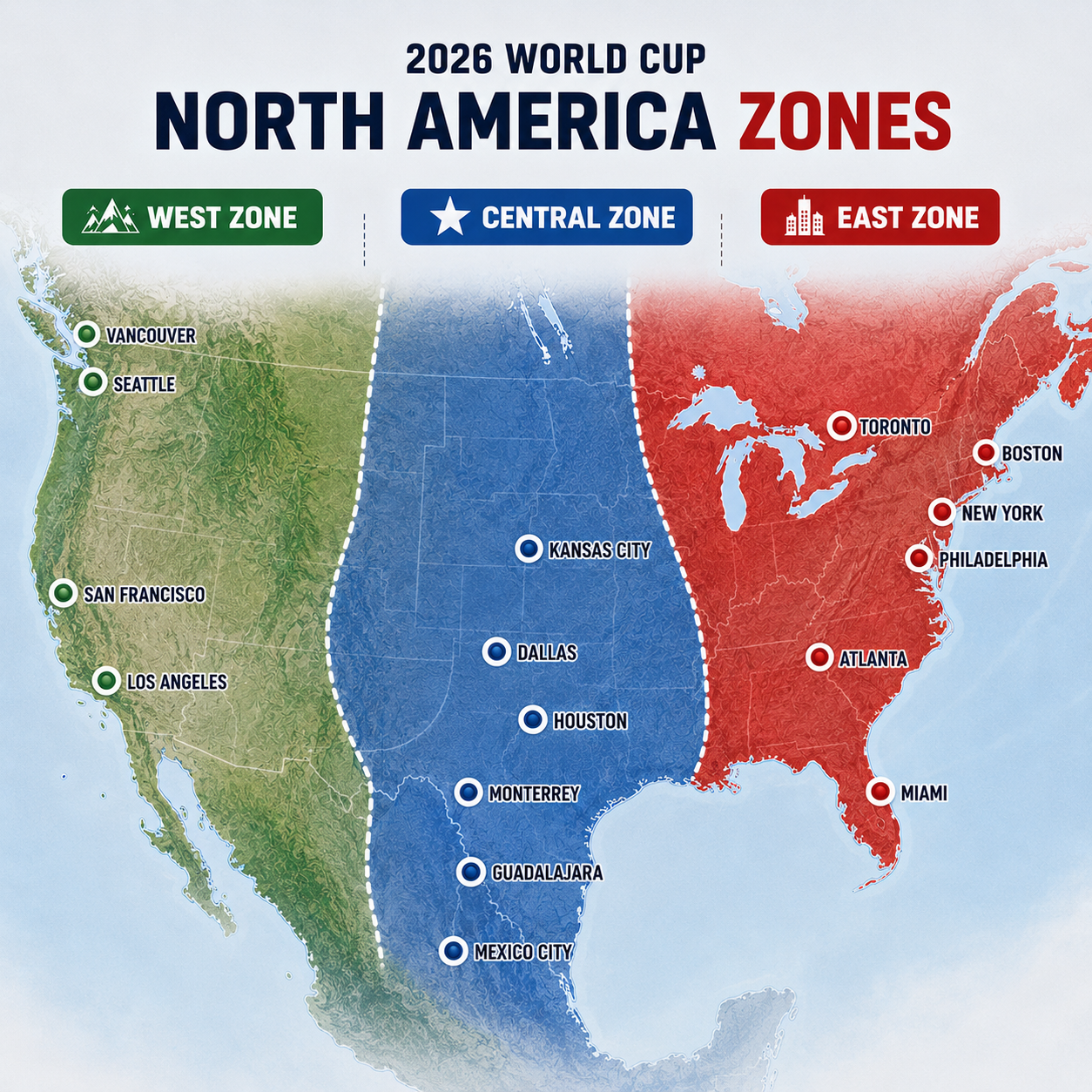
Despite dividing games in the into three regional “zones” in the group stages, the scale of the North American landmass means that extensive travel is still required by teams. Unlike compact European hosts, a single “zone” in 2026 covers a staggering amount of territory.
For example, a team playing exclusively within the “West Zone” might still face a 1,300-mile flight between Vancouver and Los Angeles, a distance greater than flying from London to Athens. The “East Zone” stretches over 1,500 miles from Toronto down to Miami. Because the baseline land area is so great, “local” regional travel in North America still generates more carbon emissions than cross-country travel would anywhere else in the world.
The Group Stage Frequent Flyers
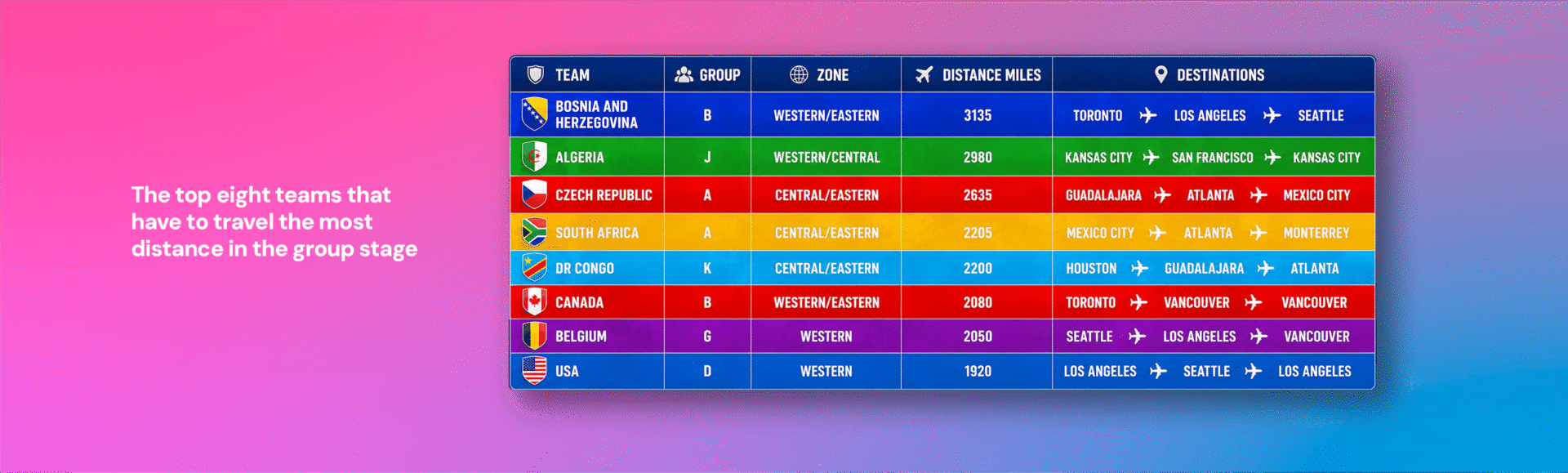
Despite the implementation of regional zones, the sheer geography of North America means that some teams are facing gruelling schedules in their three group stage games.
For some of the nations, the “local” group stage looks more like a global tour, racking up thousands of air miles before the tournament reaches the knockout stage.
A clear trend emerges from the data: teams in the Western Zone cover the most ground. While the East and Central zones feature relatively dense city clusters, the Pacific/Western region requires immense linear travel. Moving between venues like Vancouver, Seattle, and Los Angeles turns single intra-zone fixtures into the equivalent of transcontinental flights.
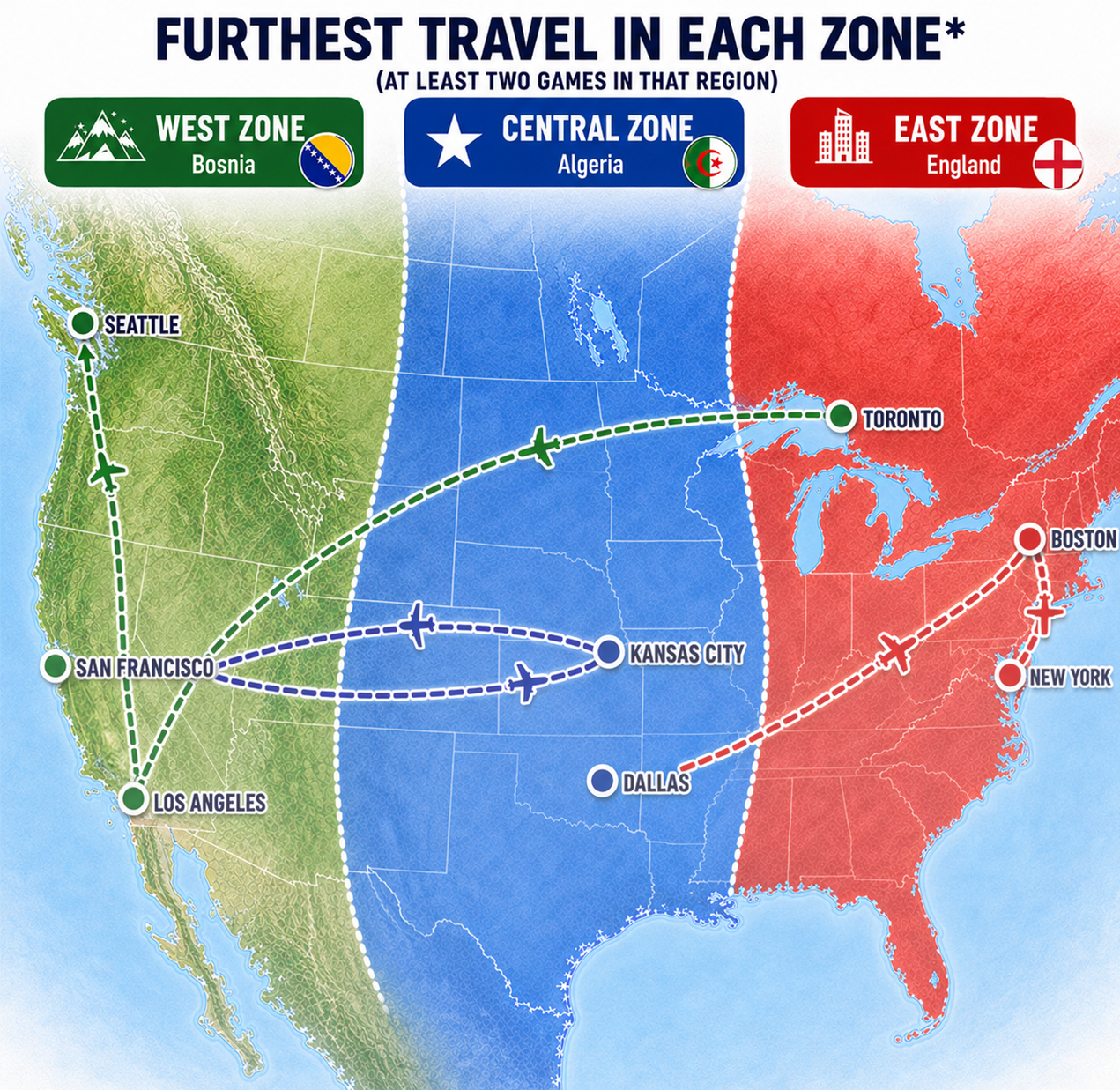
The map shows the journeys of Bosnia, Algeria and England – the teams that travel the furthest in their respective zones (minimum of two games in a zone).
The Knockout Exhaustion Phase
For the teams that progress from the group stage, they are rewarded with even more travel and this time the regional safety nets vanish. This means that the cross-continent travel is a very real possibility, which could send a team from Vancouver to Miami in a matter of days.
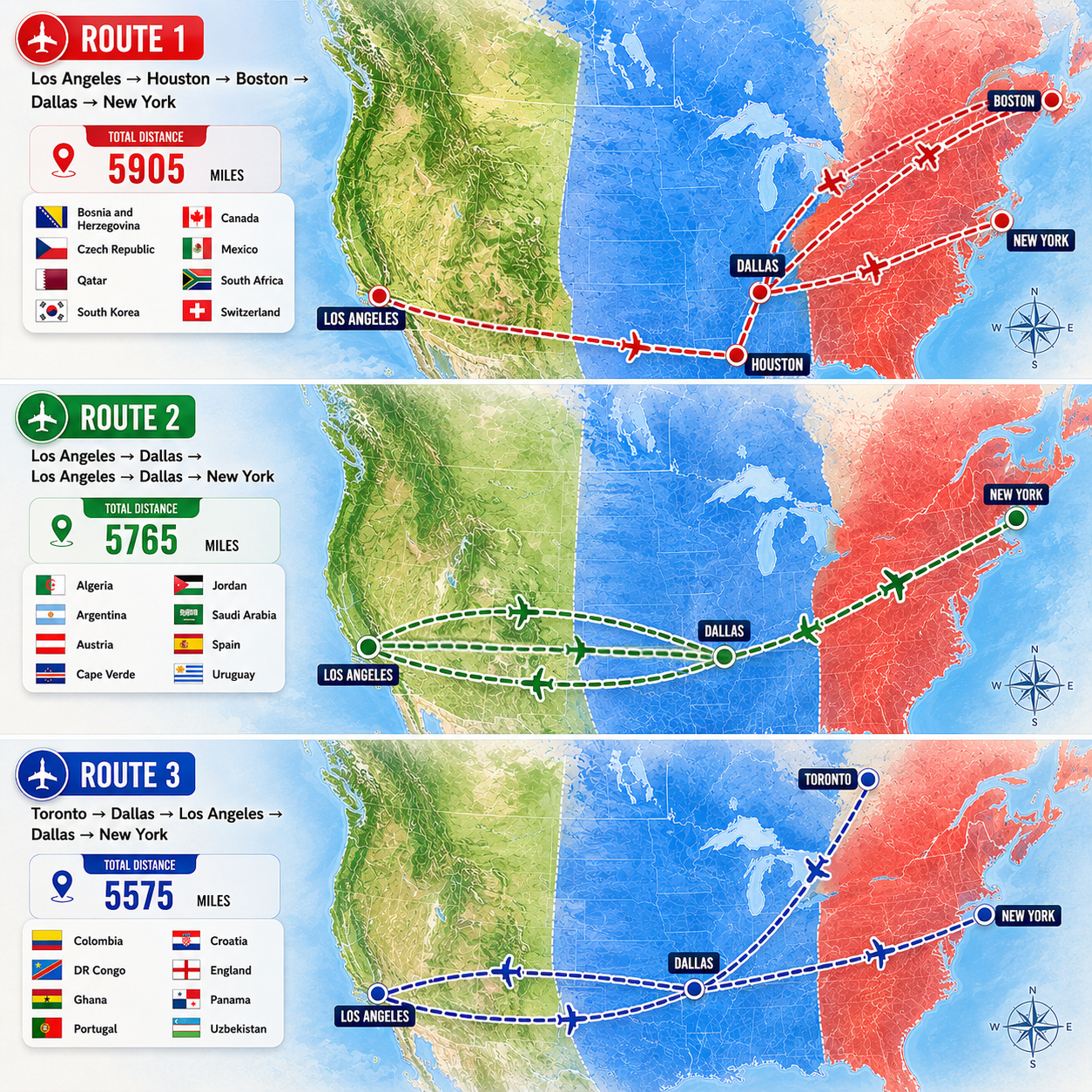
Because the knockout stage has sixteen individual fixtures, this means that there are sixteen possible routes to the final. The longest three hypothetical routes to the final are displayed in the map opposite.
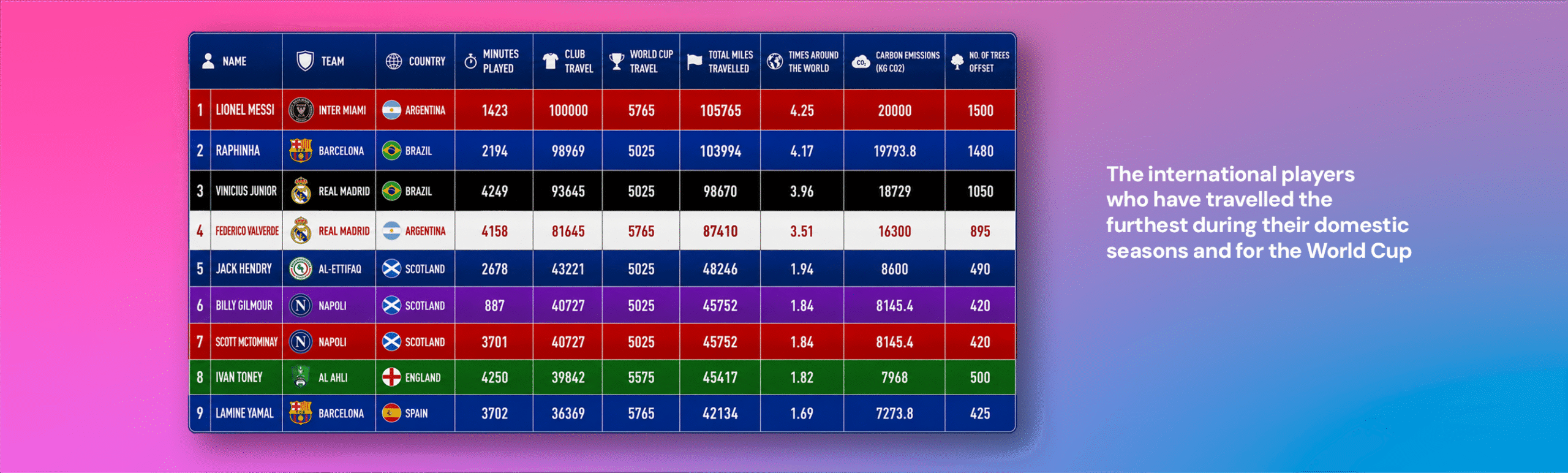
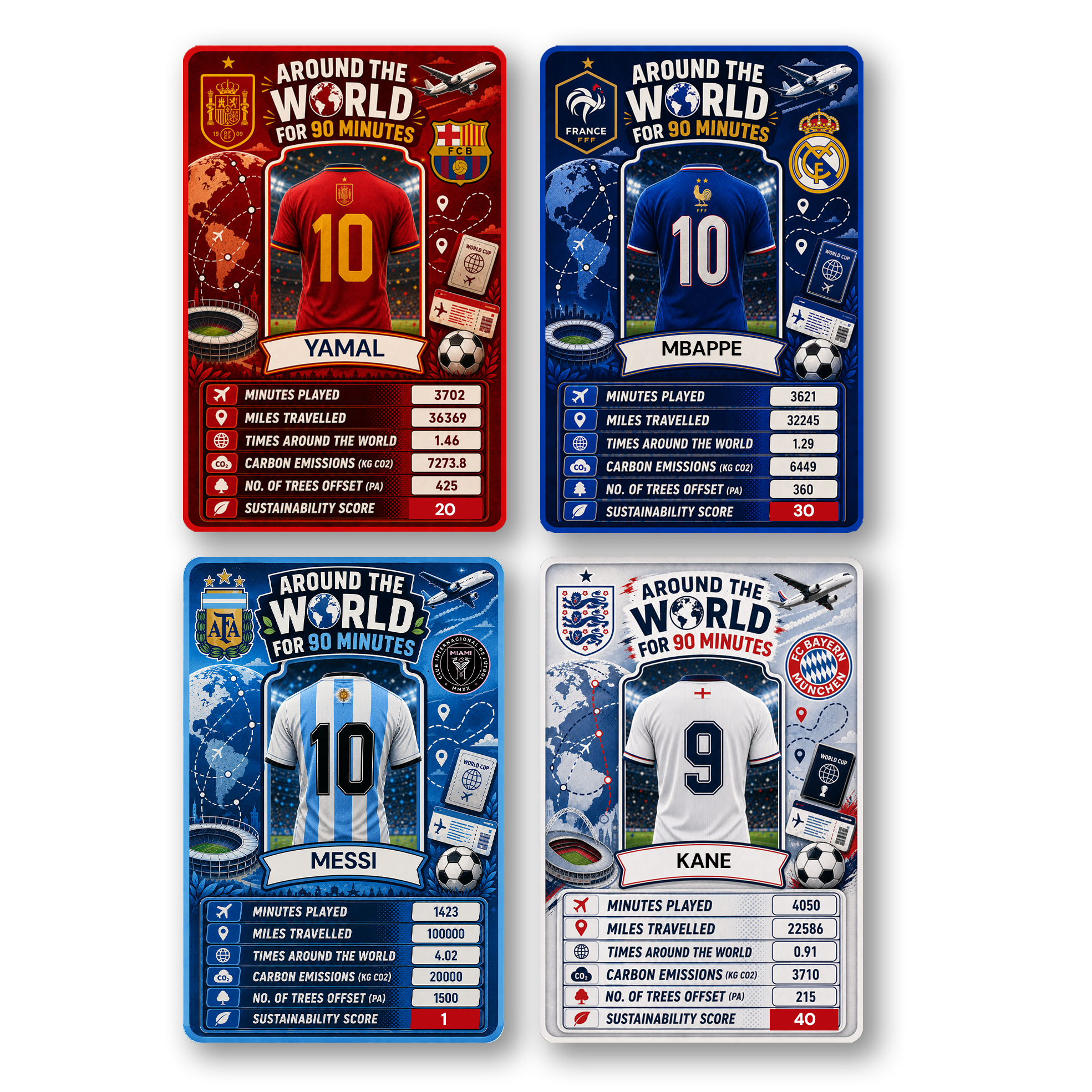
Global Superstars Full Season Travel Burnout
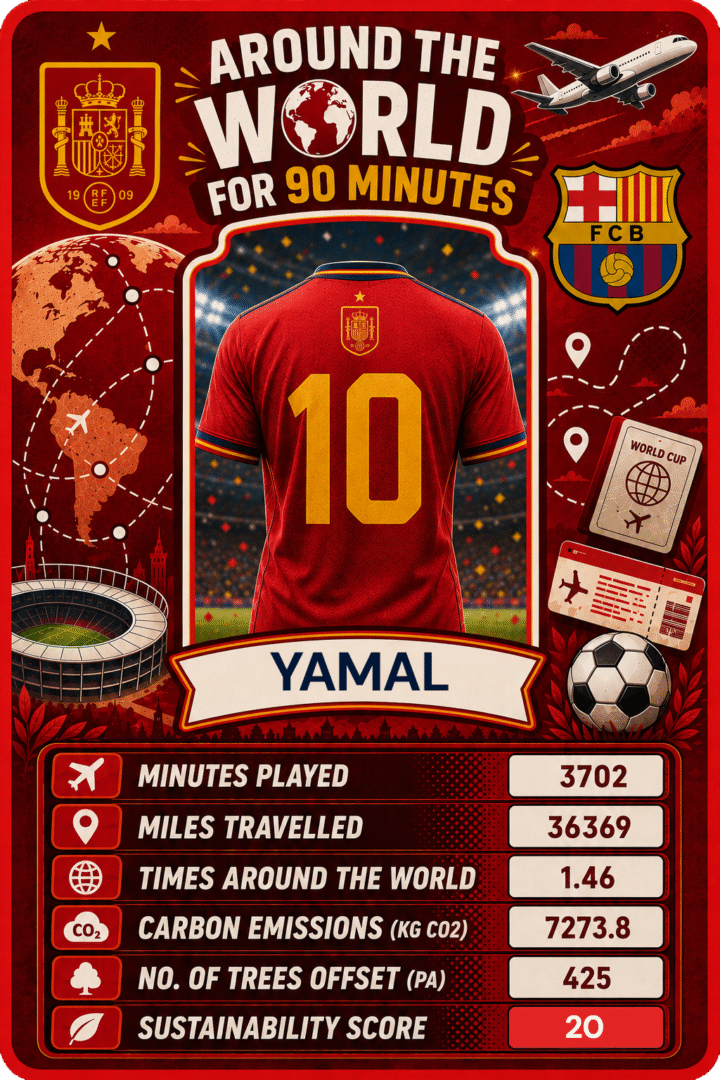
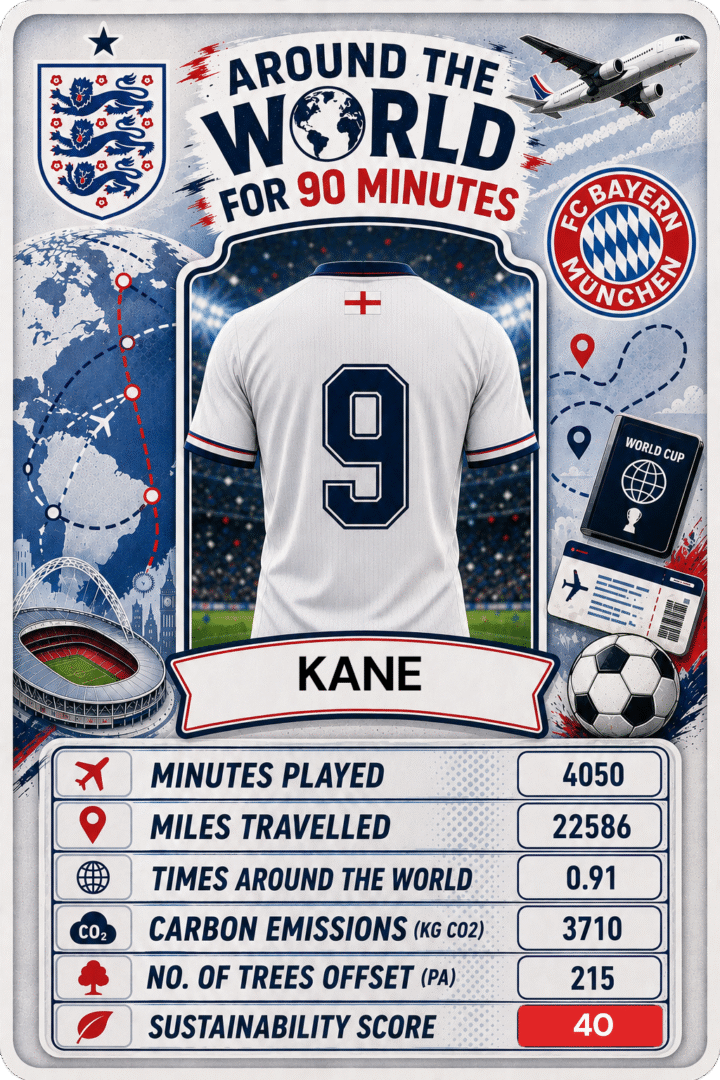
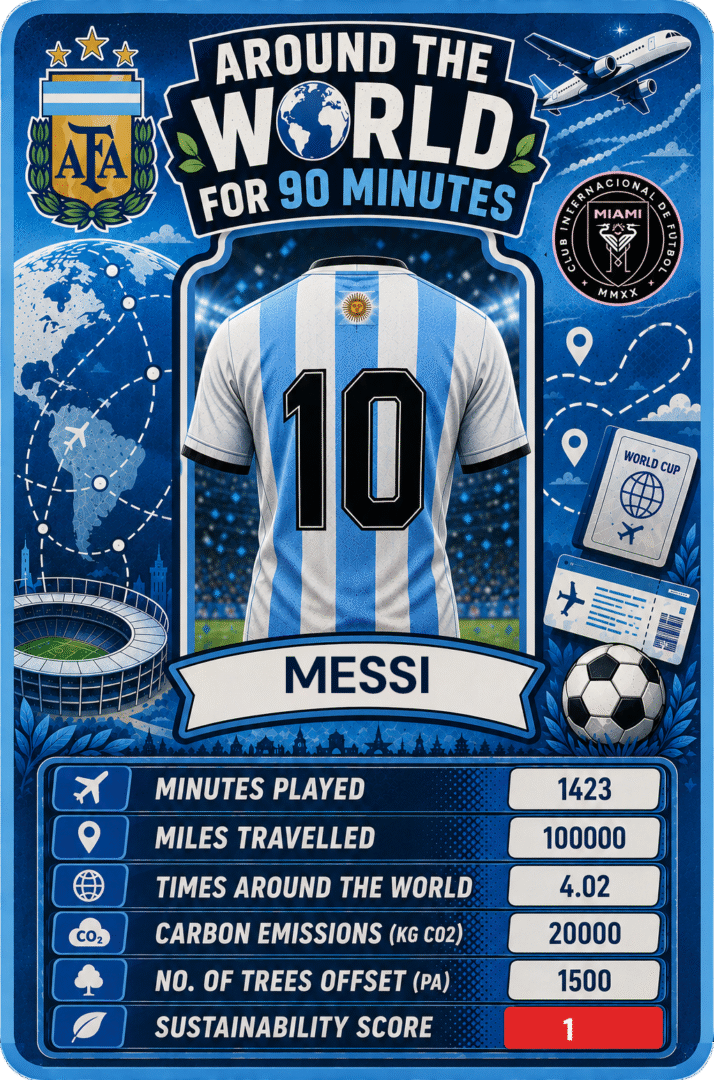
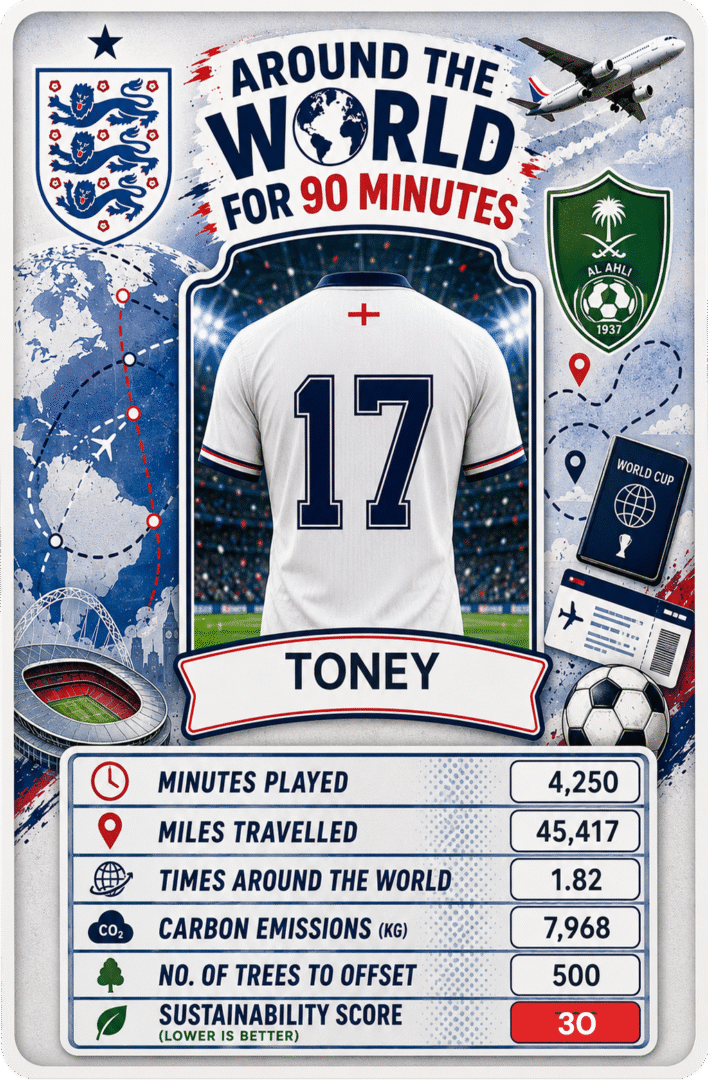
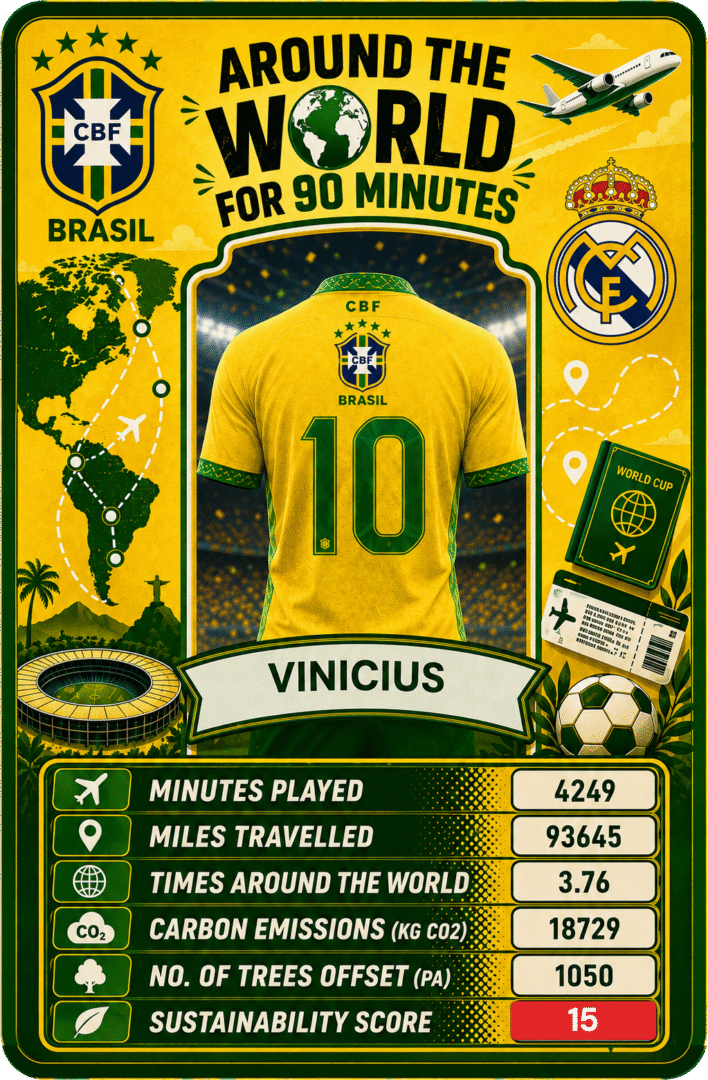
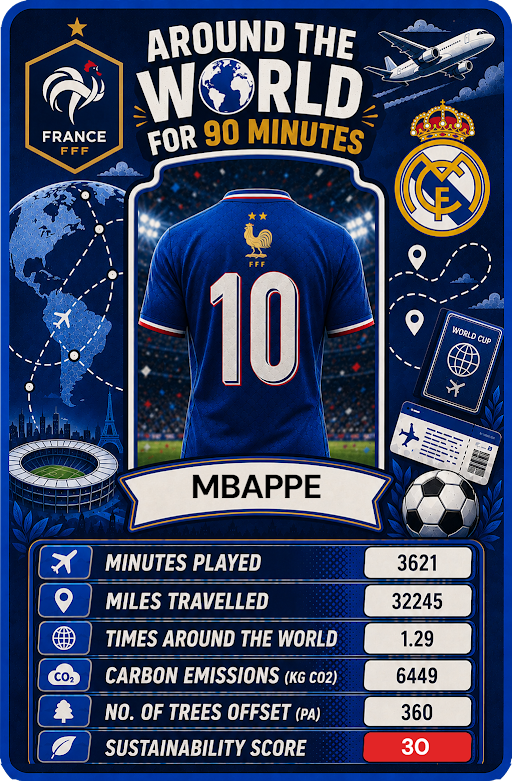
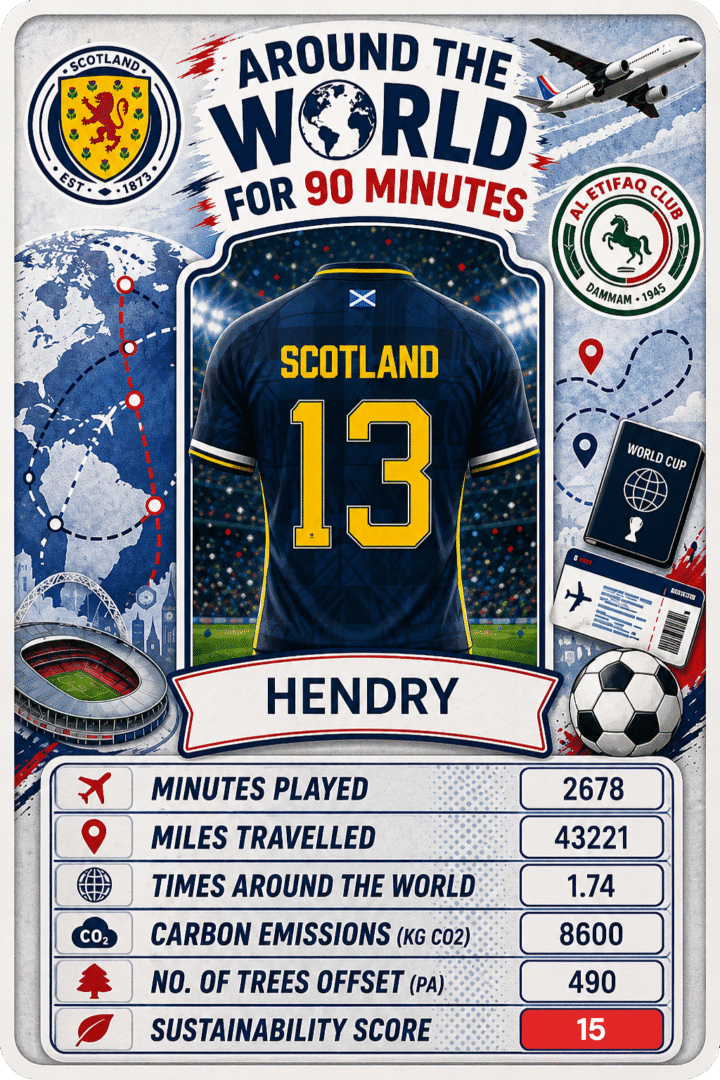
The world’s most elite players enter this tournament already facing physical exhaustion from an already packed global schedule. Domestic leagues, continental club tournaments and international representation means players have an extremely packed schedule – and a big carbon footprint.
If Lionel Messi had played in every single club and country game this season, he would have covered 100,000 miles, roughly 4.02 times around the world.
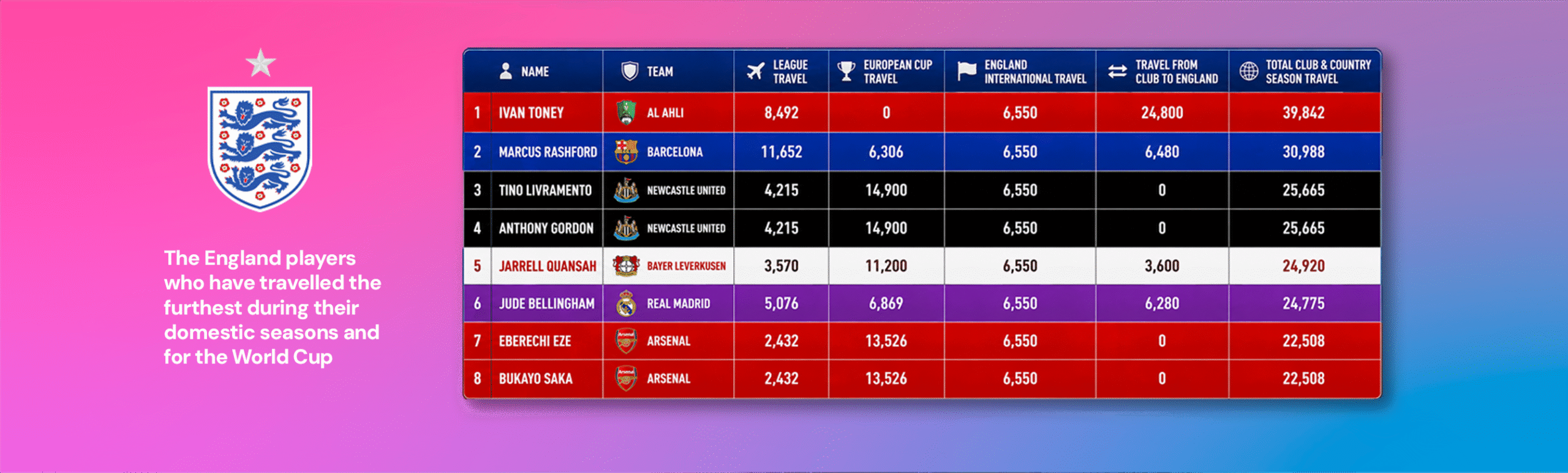
The Home Nations
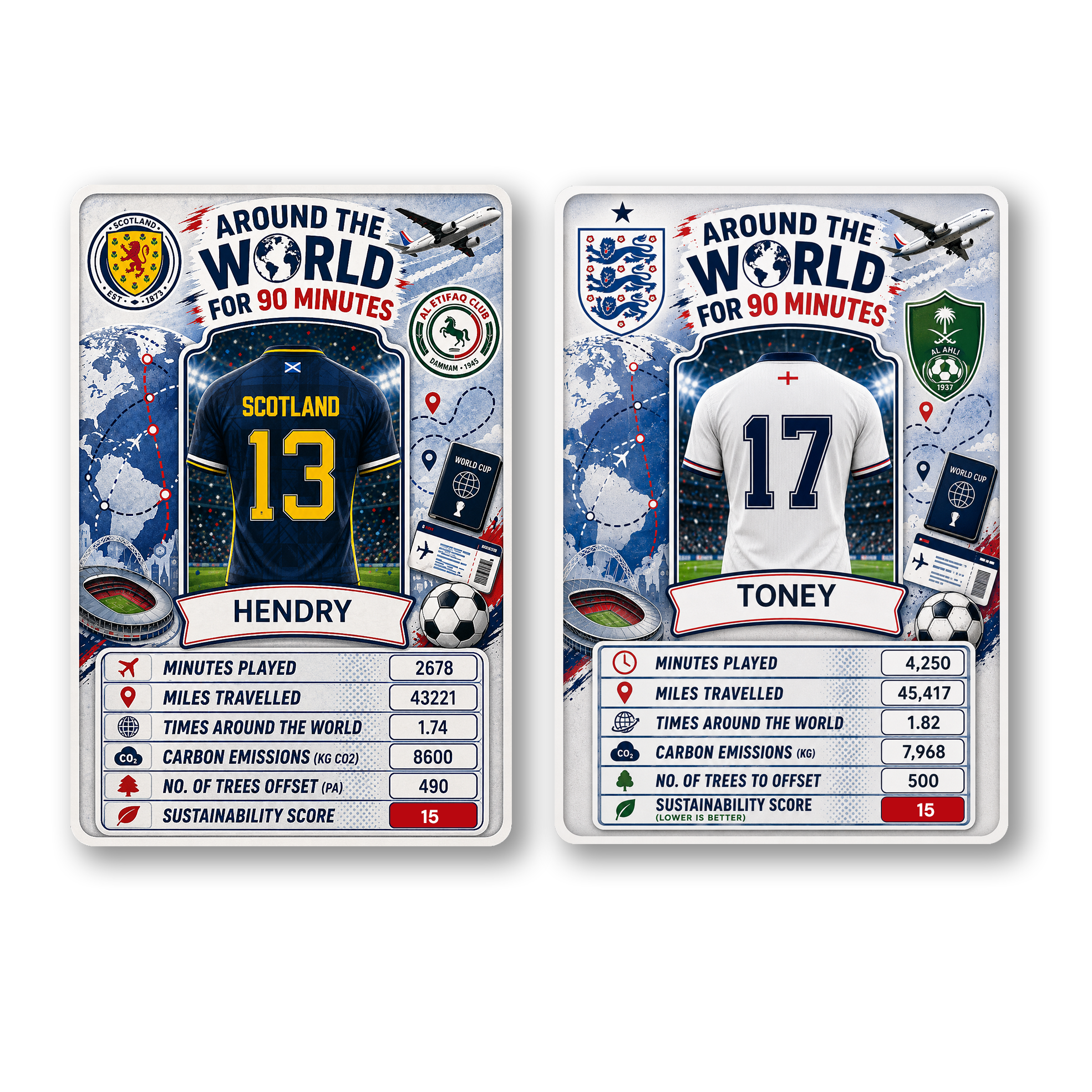
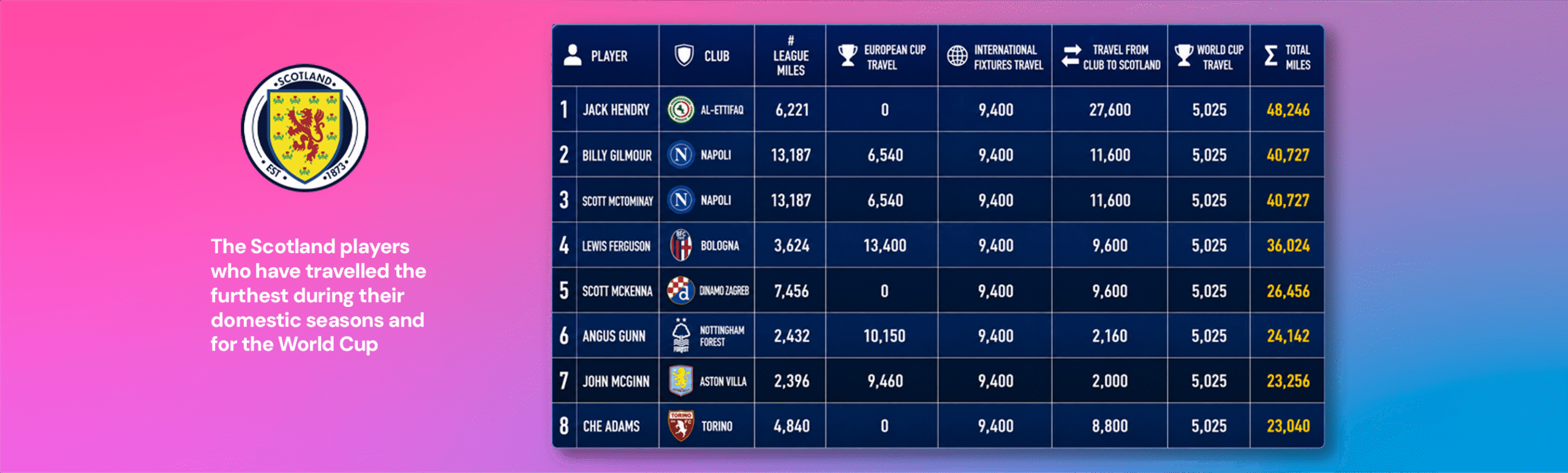
While both England and Scotland benefit from an Eastern-zone focus, the regional scale is still large. Both squads will have to travel over 1,200 miles in the group stage alone. Should either team make it all the way to the final, England could log a gruelling 7,315 miles, while Scotland are looking at up to 6,300 miles of total travel.
Because both teams have many players who play both Domestic and European Cup football, exhaustion could play a factor should the schedule become too gruelling, combined with the travel.

LET’S HAVE A CHAT
Let’s go grab a coffee. We’ve got a lot to talk about. It’s time to Excite. Ignite. and Explode. your business into reaching your ambitions.
Contact us at:
