The paradox at the heart of SME marketing
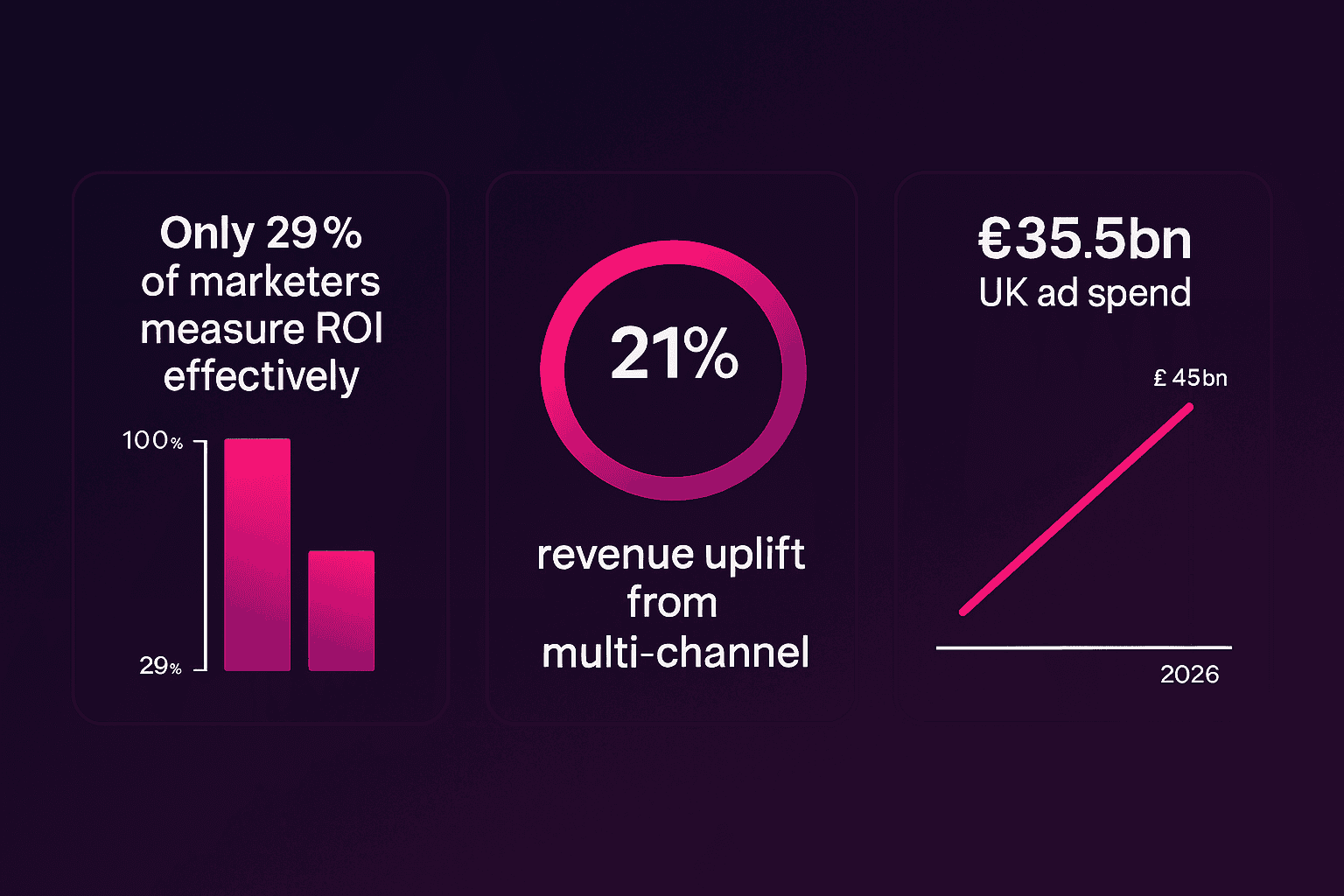
UK digital ad spend hit £35.5 billion in 2024, and forecasts put it at £45 billion by 2026 (IAB UK). On paper, investment is rising. But many SMEs remain under pressure, with profitability, staffing, and rising costs still cited as leading concerns.
This creates a paradox. Businesses are spending more on marketing, but the margin for error has never been smaller.
Over the last five years working with Yorkshire SMEs, I’ve learned that budget size doesn’t dictate marketing success. What matters is how sophisticated the strategy is. In fact, smaller budgets often demand more refinement, not less.
Why smaller budgets demand sharper strategy
When I was asked about the most counterintuitive lesson from working with SMEs, my answer was simple: smaller budgets force greater discipline.
“With SMEs, the thing about a smaller budget is that you have to be more refined in the targeting. You can’t throw money at broad match keywords and performance max campaigns. You refine, refine, and refine again. The paradox is that while a multi-channel approach often converts best, it’s harder to implement when the budget is tight. So you have to be precise about when and how you execute.”
That precision often means picking one or two channels and doing them exceptionally well. Around £1,500 a month is the threshold we see for SMEs to run a sustainable, focused programme. Below that, you can make one channel work, but spreading thin across too many rarely delivers.
“Small budgets don’t lower the bar. They raise it.”
Case study: B2B vs B2C
We’ve seen this play out across industries.
A Yorkshire dental practice invested in paid search. They saw sign-ups, but not enough private patient conversions to hit their ROI expectations. By contrast, an engineering and manufacturing SME with a similar spend generated £1 million in quoted proposals. They didn’t close all of that, but they won enough to justify reinvestment.
The difference was not budget size. It was strategy.
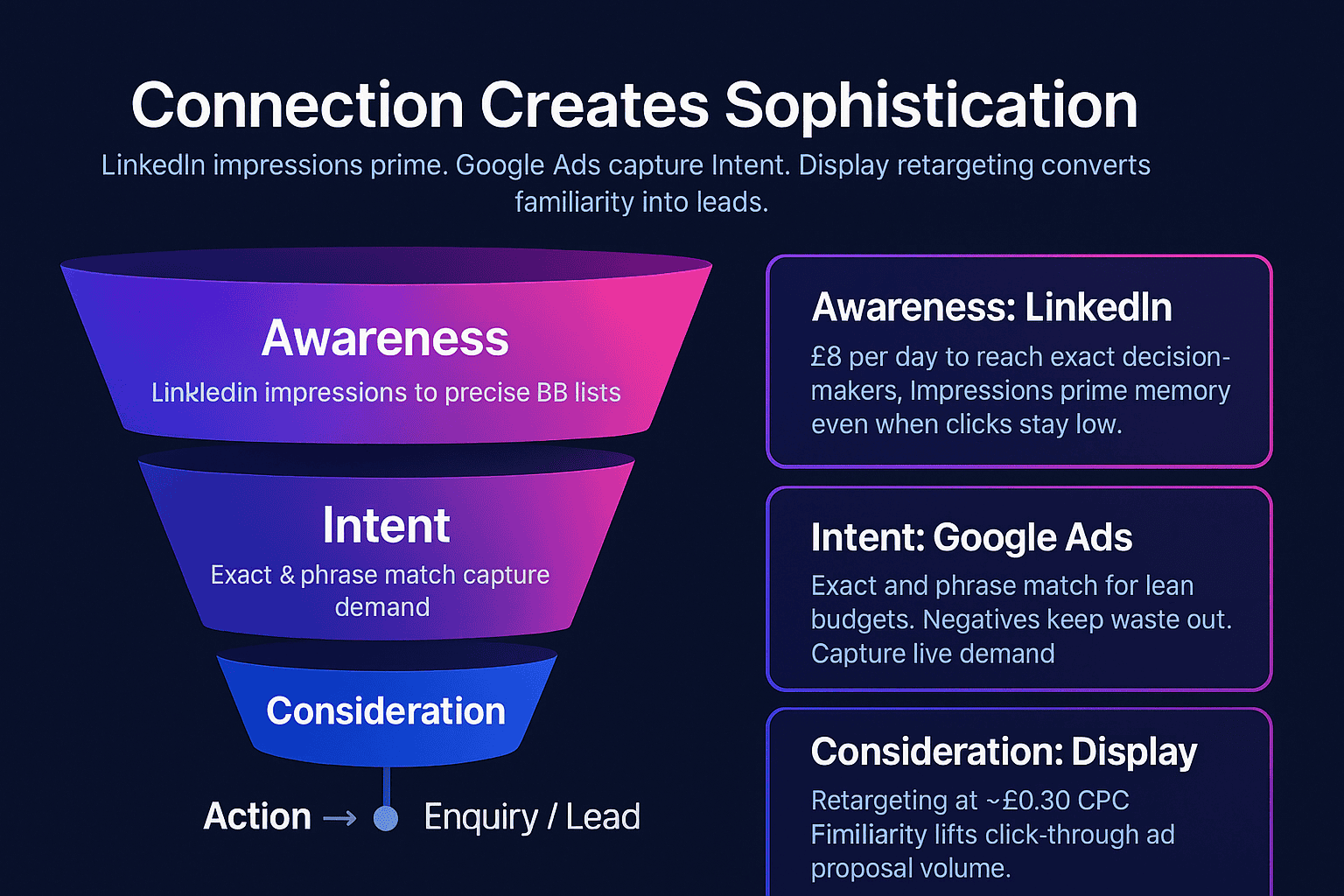
With the engineering company we used B2B data lists to define their target market, exact and phrase match keywords (frowned upon in many circles, but powerful when budgets are lean), and a mix of Google Ads, LinkedIn impressions, and low-cost display retargeting. LinkedIn spend was kept at just £8 a day, delivering 2,000–3,000 impressions to decision-makers each month. Most never clicked. But they saw the brand consistently, and that awareness paid off when paired with retargeting clicks at under 30p.
What looked like a “backwards” approach to larger agencies worked because every element connected.
Budget Channel Focus Outcome Lesson £500 per month One Paid Search Channel (Dental Practice) Modest patient enquiries, ROI limited Too narrow, not enough amplification £1,500 per month Paid Search + LinkedIn Impressions + Display Retargeting (Engineering SME) £1m in quoted proposals, sustainable ROI Connections between channels = amplified results
Connection creates sophistication
Big companies can afford waste. SMEs cannot. That forces a kind of joined-up thinking that often outperforms larger competitors.
Each channel must amplify the next. LinkedIn impressions prime the audience. Google Ads capture intent. Display ads follow up. Together they create familiarity that drives conversions.
Research supports this. Multi-channel marketing generates 21% more revenue, and campaigns using three or more channels see ~250% higher engagement than single-channel strategies (ProfileTree).
The attribution challenge
Of course, none of this matters if you can’t prove ROI. Yet only 29% of marketers in 2025 report measuring ROI effectively (SQ Magazine).
That is where integration helps SMEs. Take a Leeds based recruitment agency we work with. They started with paid campaigns that generated quality leads. But they wanted to reduce ad spend over time. The solution was to build SEO into the mix.
Content written for SEO doubled as thought leadership. That content fed PR, which built backlinks. The backlinks lifted rankings, which reduced dependence on paid ads.
Attribution became visible not through complex dashboards, but through connected activity.
Sophistication isn’t jargon
Many Marketing Managers underestimate the technical tools now available. We use software that benchmarks content against the top twenty results for any keyword, highlighting semantic gaps and unanswered questions. We add schema markup and FAQs.
But we don’t present it as technical jargon. We explain it simply: we’re making your content the best version available, structured so that both humans and search engines understand it.
That reassurance matters. It shows that sophistication isn’t complexity for its own sake. It’s process.
The budget allocation problem
Budget allocation remains the hardest question. IPA Bellwether data shows that in 2025, a net balance of just 1.9% of UK companies increased marketing budgets, with roughly one in five cutting spend (IPA Bellwether via Sopro). Growth is cautious.
For SMEs working with £1,500 or less per month, the choice is stark: one or two channels well, or a diluted effort across many. Email is cheap but needs an audience. PR builds authority but demands time. AI-generated content is abundant but needs systems to make it effective.
Sophistication is in making the right call.
AI changes nothing, and everything
AI has made everyone a copywriter. But content alone doesn’t deliver.
What surrounds it matters:
- Competitor analysis
- Keyword strategy
- Technical implementation
- Multi-channel amplification
AI democratises output. Strategy still defines success.
The SME advantage
Three-quarters of marketing leaders admit their organisations are unprepared for AI adoption (Marketing Week). SMEs have the advantage. They are agile. They have fewer silos. They can connect strategies faster than corporates tied up in legacy systems.
We’ve seen it first-hand. Manufacturers linking content to PR. Professional services firms aligning LinkedIn with SEO. Recruitment companies using thought leadership to fuel multi-channel campaigns.
This is the paradox resolved. Small budgets don’t limit sophistication. They demand it.
And the companies that embrace connection over complexity will win.